

It’s a solution that helps track and extract data, manage deduction recoveries, provide key insights and make improvements — all in one place. That means you’ll have more control over both credit and cash sales, helping improve your accounts receivable efficiency in ways that positively impact your entire customer base. If your customers are https://www.bookstime.com/ continually taking advantage of flexible payment terms, you may need to take a more active role in measuring and managing these relationships. For example, it may be helpful to clarify your credit policy, offer multiple payment options and set automated reminders to encourage timely payments. When working with the accounts receivables turnover ratio formula, remember that you’re seeing the outcome of many moving parts.
Financial Leverage Ratio
For instance, the AP turnover ratio measures how efficiently a company manages its accounts payables by calculating the number of times it pays its suppliers in a given period. When calculating the accounts payable turnover ratio, it is essential to use only credit purchases rather than total purchases. This approach provides a more accurate picture of supplier payment patterns. Additionally, it is valuable to compare your AP turnover ratio with your accounts receivable turnover ratio to ensure effective cash flow management. A debtor’s turnover ratio demonstrates how effective a company’s collections process is and what needs to be done to collect further on late payments.
- Flexible payment methods increase collections by catering to diverse customer preferences, giving them the opportunity to pay more promptly.
- It can also indicate that the company’s customers are of high quality and/or it runs on a cash basis.
- If you’re in construction, you’ll want to research your industry’s average receivables turnover ratio and compare your company’s ratio based on those averages.
- Ramp’s accounts payable tools help you stay flexible while AR catches up.
- Now that you’ve seen how the receivables turnover ratio is calculated, let’s understand how to interpret the results and what they reveal about your collections performance.
- Understanding this ratio is crucial for assessing your company’s ability to meet its trade credit obligations effectively.
#28 – Enforcing Cash Discounts: Change Your Customers’ Payment Habits
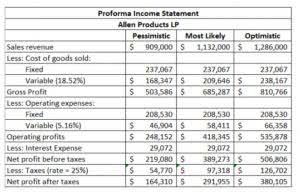
Suppose you need to calculate the operating margin ratio of a business that you’re analyzing. For our illustrative example, let’s say that you own a company with the following financials. Aging Buckets Percentages show what percentage of your AR falls into different aging categories (current, 1-30 days, days, etc.). Access and download collection of free Templates to help power your productivity and performance. See how companies like yours are getting paid quicker with Paidnice.
How to Analyze Email Marketing ROI in Excel?
The formula is your roadmap, helping you translate financial data into actionable insights. Understanding the formula is crucial for anyone looking to analyze a company’s financial performance. It’s a simple yet powerful tool for understanding how efficiently a company manages its credit sales. Understanding the Accounts Payable Turnover Ratio is crucial for evaluating your company’s financial health and operational efficiency. As you apply this knowledge, consider how your payment practices can influence supplier relationships and liquidity.
What does a high Accounts Payable Turnover Ratio indicate?
- A single financial ratio, like operating margin, gives you only one piece of information about a company’s financial picture.
- These invoices are matched against purchase orders and receiving documents multiple times.
- Delayed receivables can disrupt cash flow and impact supplier payments.
- A low turnover implies lenient credit terms or delays in payments slowing cash flow, neither of which is good for business.
- Norms that exist for receivables turnover ratios are industry-based, and any business you want to compare should have a similar structure to your own.
- That’s why you use the average accounts receivable—the average of all recorded AR balances throughout the analysis period.
Here are some examples of how an average collection period can positively or accounts receivable turnover ratio formula negatively affect a business. Net sales is the amount after sales returns, discounts, and sales allowances are subtracted from gross sales. The next step is to calculate the average accounts receivable, which is $22,500.
- A lower ratio indicates payments are spread out over longer periods.
- Don’t just check credit scores—call references and start new customers with lower credit limits that can increase over time.
- Another reason you may have a high receivables turnover is that you have strict or conservative credit policies, meaning you’re careful about who you offer credit to.
- It is a better indicator of liquidity than the current ratio in instances where inventory is illiquid.
- A turnover ratio of 6.0 means you collected your average receivables balance about six times during the year.
- However, if credit policies are too tight or competition accepts more insurance and/or has deep discounts, they may struggle during any economic downturn.
Understanding net credit sales

Accounts receivable turnover also is and indication of the quality of credit sales and receivables. A http://dev.siriusinstitute.com/what-does-contract-w2-mean-for-small-businesses/ company with a higher ratio shows that credit sales are more likely to be collected than a company with a lower ratio. Since accounts receivable are often posted as collateral for loans, quality of receivables is important.

How to Interpret the Accounts Payable Turnover Ratio

The longer you let it go, the harder it will be on positive business cash flow. Some businesses use Google or Excel spreadsheets to calculate accounts receivable turnover. But some modern accounting and ERP software systems provide automatic turnover ratio calculations and metrics trends. Average accounts receivable is calculated as the sum of the starting and ending receivables over a given period of time(usually a month, quarter, or year). That number is then divided by 2 to determine a relatively accurate financial ratio for the timeframe by averaging the beginning and ending balances. A wholesale distributor who was proud of their 12.1 AR turnover ratio until we calculated that their strict payment terms were costing them approximately $700,000 in lost sales annually.
ESSENTIAL KPIS FOR MEASURING ACCOUNTS RECEIVABLE PERFORMANCE
Analysts use market value ratios to understand whether a company’s shares are fairly priced, undervalued, or overvalued. A declining liquidity ratio can signal potential cash flow problems. Companies can benchmark their accounts receivable turnover by comparing it to their industry average. Days Sales Outstanding (DSO) measures the average collection period. It’s essentially the same as AR Turnover in Days but calculated slightly differently.